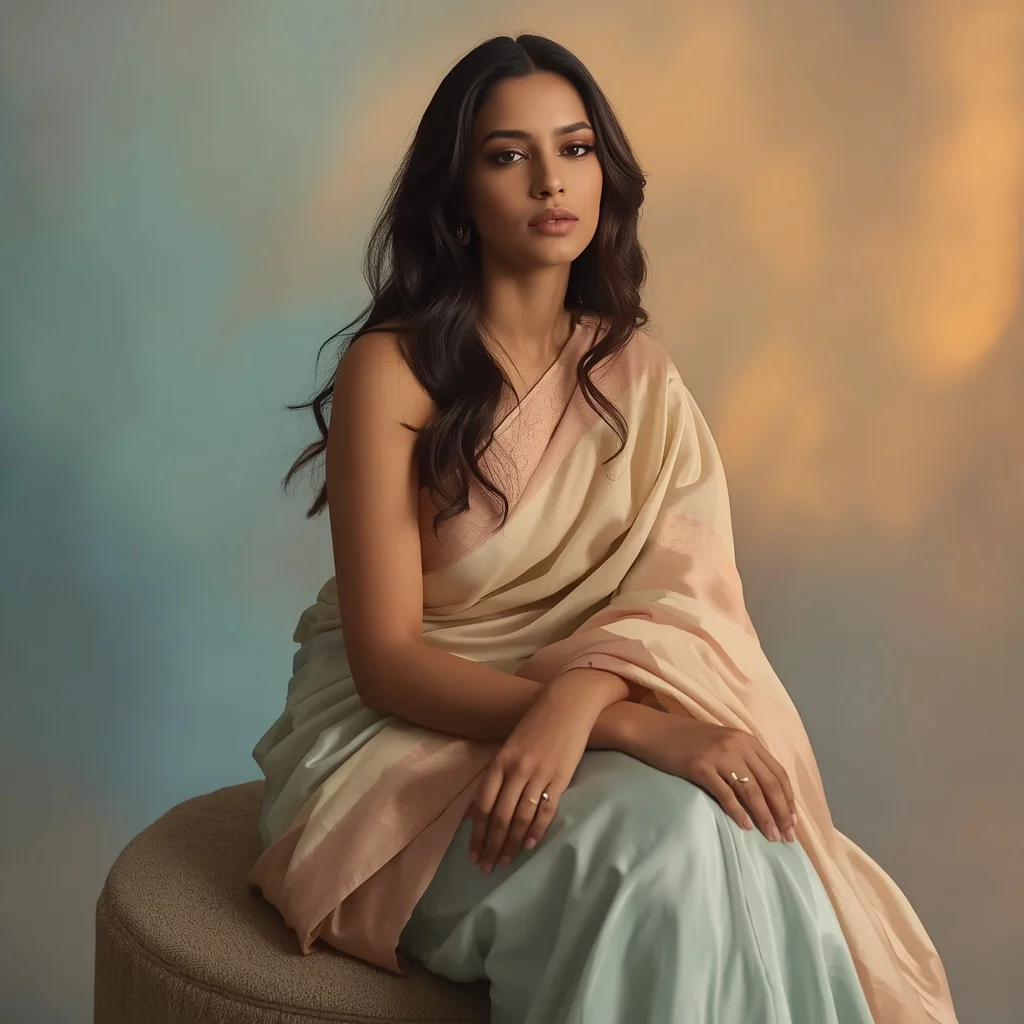

Shimmering Silver Sequin Flapper Dress for a Dynamic Jazz Dance | Traditional Look Prompt
Jazz-era glamour meets AI image generation in this evocative prompt. The scene captures a woman in her late twenties, alive with motion, under the moody lights of a vintage club. It is a celebration of texture, light, and the rebellious spirit of the Roaring Twenties.
This article unpacks every layer of the prompt, from the shimmering silver sequin flapper dress to the dramatic backlighting. You will learn what the AI expects, why the combination works so well, and how to adapt the idea across different tools and styles.
What this shimmering flapper-dress prompt is asking for
The prompt calls for a full-body, dynamic portrait of a performer mid-motion on a dimly lit stage. Every detail is chosen to evoke the energy of a vintage jazz club, from the swaying fringe of her dress to the blurred musicians behind her. The AI must balance a strong central figure with a rich, atmospheric background.
- A woman in her late twenties with an infectious, energetic expression
- A dazzling silver sequin flapper dress with intricate beadwork and layers of fringe
- A chic, retro bob hairstyle and dramatic makeup featuring winged eyeliner and a bold red lip
- Long pearl necklaces and T-strap dance shoes as accessories
- A dimly lit stage with velvet curtains, a spotlight, and blurred silhouettes of musicians
- Shot with a 50mm lens, f/1.8, using dramatic backlighting and soft focus
The scene the prompt builds
The stage is described as "a dimly lit stage in a vintage jazz club," immediately setting a smoky, intimate mood. "Velvet curtains, a spotlight, and the blurred silhouettes of musicians" fill the background without stealing focus, while "dramatic backlighting and soft focus" wrap the subject in a cinematic glow.
The woman herself is in motion, striking "a dynamic pose" that makes the dress come alive. The prompt specifies how the garment "shimmers and sways with her every movement," so the AI must show the fringe caught mid-swing and the sequins catching the spotlight.
Why this prompt creates a striking image
This prompt works because it layers three strong visual forces: texture, light, and movement. The sequins and fringe give the AI countless tiny highlights to render, the backlighting creates separation and drama, and the dynamic pose sells the performance energy. Together they make a static image feel alive.
- The contrast between the shimmering silver dress and the dark, velvety background makes the subject pop dramatically.
- The vintage jazz-club setting adds storytelling depth, turning a fashion portrait into a narrative about music and nightlife.
- The precise camera details like the 50mm lens at f/1.8 guide the AI toward a shallow depth of field that feels professional and intentional.
Three visual styles for this flapper prompt
You can steer this prompt toward three distinct looks without changing the core scene. The styles below all stay within the vintage jazz-club setting and keep the silver sequin flapper dress as the hero element.
- Vintage Hollywood glamour: Ask for soft, diffused lighting and a black-and-white conversion with selective silver tones to mimic a 1920s publicity still.
- Hyperrealistic editorial: Push the AI to render every sequin and bead with sharp clarity, as if shot for a modern fashion magazine in a period setting.
- Painterly art-deco illustration: Request flat color planes, geometric art-deco motifs in the background, and a stylized, poster-like finish that echoes 1920s graphic design.
How to generate this jazz-dance image step by step
Follow these six steps to get a clean, well-composed result. The process works whether you are using a text-to-image model or an image-to-image workflow with a reference photo.
- Copy the full prompt. Start by copying the entire prompt text exactly as provided, preserving every comma and camera specification.
- Upload a reference photo. If your tool supports image input, upload a photo of a person in a dynamic dance pose to guide the body language and framing.
- Generate the initial image. Run the prompt and generate four variations. Look for one where the dress fringe is clearly in motion and the spotlight hits the sequins.
- Check the hands and face. Zoom in on the hands and facial features. The winged eyeliner and bold red lip should be symmetrical, and fingers should look natural, not fused.
- Check the main object. Examine the silver sequin flapper dress. The beadwork and fringe layers must be distinct, not a muddy silver blob, and the pearl necklaces should hang naturally.
- Refine with inpainting or remix. If any area fails, mask it and regenerate only that part, keeping the prompt consistent. Adjust the soft focus strength if the background musicians are too sharp.
Using a reference photo for the flapper pose
A reference photo helps the AI nail the dynamic pose and the fall of the fringe. Choose an image that matches the energy and framing you want, then let the prompt override the clothing and lighting.
- Pick a photo with a clear, full-body dance pose where one arm is extended and the dress would naturally swing outward.
- Ensure the reference face is well-lit from behind or the side so the AI can map the dramatic backlighting onto the facial structure.
- Avoid references with busy modern backgrounds; a plain studio shot works best so the AI can replace it with the velvet curtains and blurred musicians.
Tools that handle the sequin dress detail well
Different AI image tools render textures, lighting, and human features with varying success. The table below compares four popular options for this specific prompt.
| Tool | Access | Typical realism | Useful here for |
|---|---|---|---|
| ChatGPT | DALL·E integration | Good, with a slightly illustrative finish | Rendering the intricate beadwork and the soft focus on the velvet curtains |
| Google Gemini | Imagen integration | High photorealism | Capturing the dramatic backlighting and the shimmer on the silver sequin flapper dress |
| Leonardo AI | Web platform, free tier available | Very high with the right model | Getting the dynamic pose and the blurred silhouettes of musicians exactly right |
| Midjourney | Discord subscription | Excellent, often cinematic | Producing the moody, evocative atmosphere and the retro bob hairstyle with authentic 1920s texture |
Three tips to make the silver sequins pop
Small tweaks to the prompt or your workflow can dramatically improve how the AI handles reflective surfaces and period details.
- Add the phrase "specular highlights on the sequins" to force the AI to create distinct bright spots on the silver sequin flapper dress.
- Mention "feather boa on the floor" or "microphone stand in the foreground" to give the scene more depth and reinforce the jazz-club setting.
- Use a negative prompt to exclude modern items like smartphones or LED lights that can sneak into the blurred background.
Frequently Asked Questions
Even a well-written prompt can produce flawed results. The table below lists four failures this prompt tends to trigger and the exact changes that correct them.
| Issue | What to change | ||
|---|---|---|---|
| Fringe looks like a solid silver sheet | Add "individual fringe strands catching the light" and increase the weight of the word "fringe" in the prompt. | The face is overexposed from the backlighting | Reduce the backlight intensity by specifying "rim light only, with soft fill on the face." |
| Musicians in the background are too sharp and distracting | Strengthen the blur instruction to "heavily blurred, unrecognizable silhouettes of musicians." | ||
| The pearl necklaces merge into the dress | Add "pearls with visible individual spheres and subtle shadows between them" to separate the accessories. |
Can I change the dress color and keep the same prompt structure?
Yes, you can replace "silver sequin" with gold, black, or champagne. Keep the word "sequin" and "layers of fringe" so the texture and movement remain the focus, and adjust the makeup to complement the new color.
Why does the AI sometimes give the woman modern shoes?
The prompt specifies "T-strap dance shoes," but if the AI ignores it, add the decade: "1920s T-strap dance shoes with a small heel." You can also use a negative prompt for modern footwear like sneakers or stilettos.
How do I get the spotlight to hit the dress exactly right?
Add a directional cue like "a single overhead spotlight centered on the dancer, casting a bright pool of light on the sequins." This tells the AI where the main light source should fall and what it should illuminate.
Conclusion
This prompt is a masterclass in combining period fashion, dynamic movement, and atmospheric lighting. The shimmering silver sequin flapper dress becomes a canvas for the AI to show off its ability to render texture and reflection, while the jazz-club backdrop tells a story without words. By following the steps and style suggestions above, you can produce an image that feels like a frame pulled from a classic film. Experiment with the three visual styles, use the tips to handle tricky details like fringe and pearls, and do not hesitate to run multiple generations until the pose and the spotlight align perfectly.
When you have your final image, open it in your preferred editing software to fine-tune the contrast and add a subtle vignette, provided you have the right to edit the photo you are working on.